Economist Issue Notes

  • Japan will now spell names Last First
  • Alibaba’s Hanguang 800 is 13x faster in machine learning vs. Intel’s
  • Median age of US went from 28 in 1965 to 35 in 2019. In 2020, the world’s median age reached 30
  • % of global tourism revenue from Chinese went from 3% in 2006 to 26% in 2016


Adapting to Change

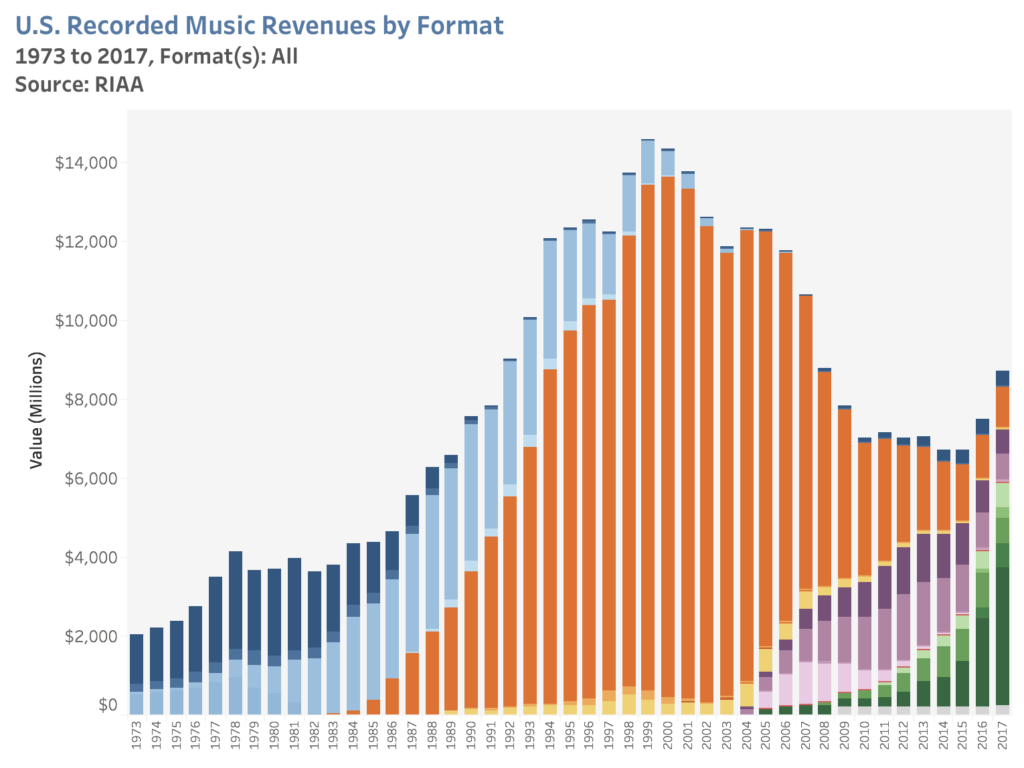
The chart below shows what happened to CDs in the music industry. After a dramatic drop in sales from 2000 to 2015, the industry is now growing again with the rise of subscription music.

U.S. music industry sales over time

As an investor, the chart is a reminder of the importance of the question “what is this business’ role in the world?”. If you fooled yourself into believing that you were a seller of music CDs rather than music, you could have believed that you defined the industry.

Sunday Series: What I’m Consuming

    • Hamdi Ulukaya made one of the best commencement speeches at Wharton. Best commencement speeches: 1) Conan O’Brien at Dartmouth in 2011, 2) Hamdi Ulukaya at Wharton in 2018, 3) Michael Lewis at Princeton in 2012. And of course, Steve Jobs at Stanford in 2005 is everyone’s favorite.
    • Six Billion Shoppers by Porter Erisman
    • Neapolitan Novels by Elena Ferente
    • Ninalee Allen Craig, from “American Girl in Italy” from 1951 by Ruth Orkin, has passed away.
    • American Girl in Italy


Investing in Labor-Intensive Industries

Availability of resources determine the cost of production, and endowments in turn determine the availability of resources. This naturally leads people to prioritize outputs that use the most available inputs for outputs of equal value, explaining why businesses of countries endowed with high-value commodities tend to prioritize the extraction and sale of these resources compared to countries that do not have such commodities. Not only are the outputs of these businesses high value, they are also readily available.

This also explains why countries without high-values commodities prioritize outputs that require human capital. At the level of comfortable sustenance, wages are cheap, and the economic ascent of Asian tigers, such as South Korea and Japan, follow this principle. Both countries grew on the back of companies finding success in labor-intensive industries such as textiles, manufacturing, shipping, and chemicals. These businesses could ramp up production as wages, paid in local currency, constituted a majority of the marginal cost and did not exceed marginal revenue as output increased.

Examples go beyond businesses and extend to governments. Government-led exports of human capital have many precedents. South Korean laborers were sent to Germany in exchange for German Mark-denominated loans that provided funds. How these funds advanced South Korea’s strategic industries exceeded the costs of the export from the leadership’s point of view.

Focusing on labor-intensive industries in countries without high-value commodities also presents lasting advantages supported by two economic principles, Balassa-Samuelson Effect and the Dutch Disease. The former tells us that productivity increases in any sector in a country can lead to wage inflation (i.e. shoe shiner being able to charge more as his/her clients get wealthier), while the latter tells us that demand for high-value commodities equates to demand for that country’s currencies, inflating all costs. While all countries are subject to the Balassa-Samuelson effect, countries without high-value commodities do not have to solve for the Dutch Disease.

This presents an opportunity to investors. In markets that are not endowed with high-value commodities, it can pay to back labor-intensive industries. This can especially be the case if the revenue is denominated in hard currency through exports.

Unfortunately, marginal costs of many labor-intensive industries such as manufacturing require include inputs outside wages such as electricity and logistics, posing risks linked to governments that are outside outside the investors’ sphere of control. Nonetheless, successful precedents are plenty, both at the level of businesses and nations. It is hard to overlook this sub-set of opportunities.
Starting the MR=MC Blog

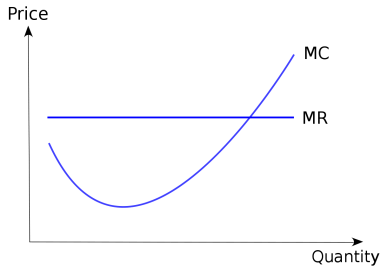
MR=MC refers to the profit maximization principle in economics where marginal revenue generated from additional production equals marginal cost expended in the production. However, I believe that the principle extends well outside the realm of maximizing a company’s profits. People and organizations put in the efforts to achieve something that they view as worthy of their efforts. Only if the results turn out to be above their expectations, they continue their efforts.

In this sense, MR=MC can function as the principle through which we can understand the world, the markets, and the players. In markets, prices move in tandem with expectations, and these expectations are set by players with their own MR=MC conditions. In politics, sovereigns and states move with strategic goals in mind, and their efforts are expended to optimize for their own MR=MC condition.

This blog will examine MR=MC equilibrium conditions across the world with a special focus on private capital investing, answering the following question:

“How can you deploy capital in a meaningful manner in today’s world?”

There are two parts to the question: 1) deploying capital in a meaningful manner, and 2) today’s world. The former involves a discussion on asset classes and business models, while the latter involves a discussion on macroeconomic trends, and technology. A recognition of these two separate discussions is why the blog’s subtitle is “Investing private capital in a global macro world”

So it begins! I hope you all enjoy the blog.